Шляпы ручной работы: common mistakes that cost you money
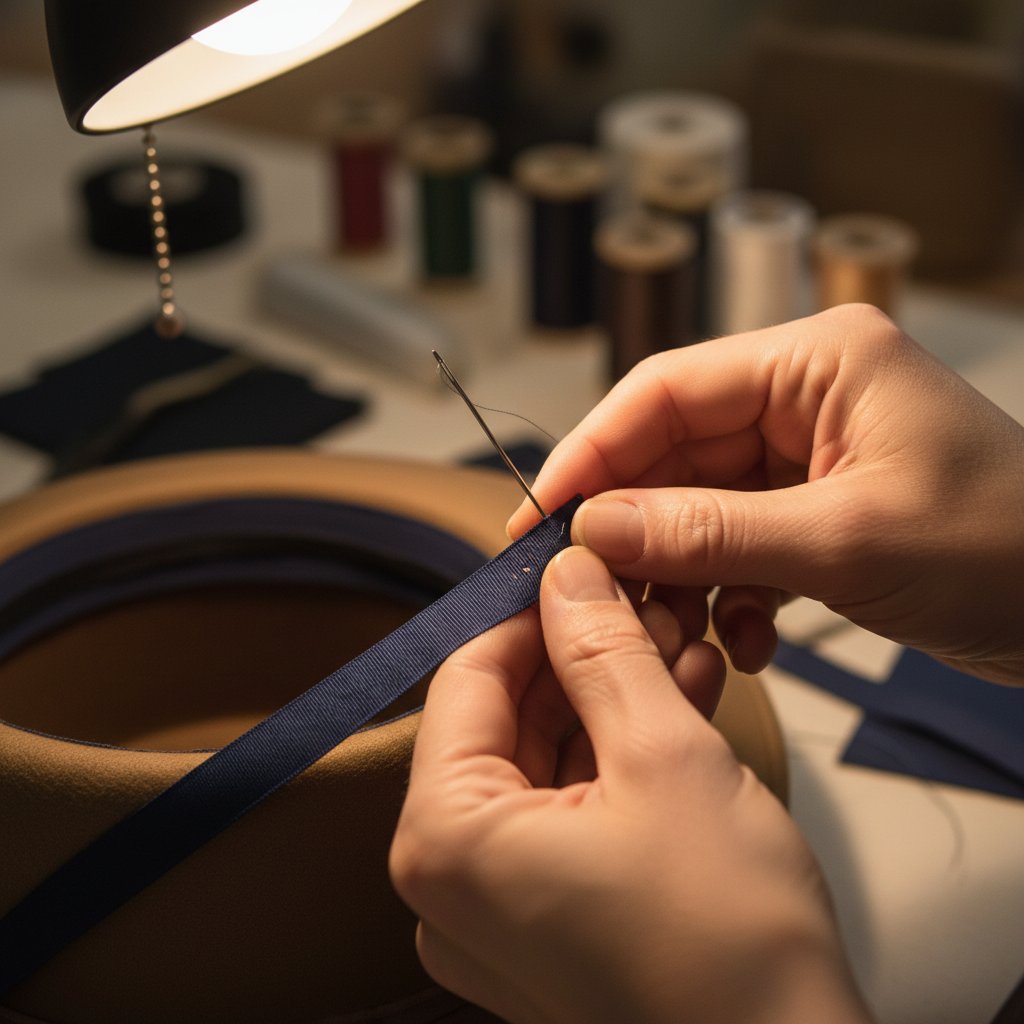
The $500 Mistake Most Handmade Hat Makers Keep Making
You've spent hours perfecting your blocking technique. Your stitches are invisible. Your ribbon work would make a milliner from the 1920s weep with joy. Yet somehow, you're barely breaking even on each hat you sell.
Here's the uncomfortable truth: technical skill doesn't equal profit. After talking with dozens of artisan hat makers who've been in the trenches for years, I've noticed a pattern. The ones struggling financially make completely different choices than those pulling in $3,000+ monthly. Let's break down the two approaches.
The "Perfectionist Approach": When Quality Becomes a Money Pit
This is where most talented makers get stuck. You believe that if you just make your hats better, customers will naturally pay more and sales will follow.
What This Looks Like:
- Spending 15-20 hours per hat because you're hand-stitching every single detail, even the parts nobody sees
- Using only the most expensive materials - $85 fur felt bodies, imported grosgrain ribbon at $12 per yard
- Offering unlimited custom revisions because you want every customer thrilled
- Underpricing to stay "competitive" - charging $180 for a hat that took you 18 hours to make
- Refusing to batch similar orders because each piece must be completely unique
The Financial Reality:
Let's do the math. If you're spending 18 hours on a hat and selling it for $180, you're making $10 per hour before materials. Subtract that $85 felt body, $25 in ribbons and trims, and you're down to $70 profit. That's $3.89 per hour. You could literally make more money at a coffee shop.
The cruel irony? Customers often can't tell the difference between your 18-hour masterpiece and a well-made 8-hour version. They're not inspecting the inside of the sweatband with a magnifying glass.
The "Business-First Approach": Strategic Craftsmanship
The makers earning real money think differently. They're still creating beautiful hats, but they've figured out where to invest their time for maximum return.
What This Looks Like:
- Streamlining production to 6-8 hours per hat by identifying which details actually matter to customers
- Creating signature styles that can be efficiently reproduced with slight variations
- Pricing based on value, not hours - charging $320-450 for hats that cost $40-60 in materials
- Batching similar tasks - blocking five hats at once, cutting all ribbons for the week on Monday
- Setting clear boundaries - one round of revisions included, additional changes cost extra
The Financial Reality:
Same hat maker, different approach. Eight hours at $380 per hat, minus $50 in materials. That's $330 profit, or $41.25 per hour. Over a month, making just 12 hats brings in $3,960 in profit. That's actual business territory.
These makers invest their "extra" time in marketing, building their email list, and creating systems that let them scale.
Side-by-Side: Where Your Money Actually Goes
| Factor | Perfectionist Approach | Business-First Approach |
|---|---|---|
| Time per hat | 15-20 hours | 6-8 hours |
| Average price | $180-220 | $320-450 |
| Material costs | $90-110 (premium everything) | $40-60 (strategic quality) |
| Profit per hat | $70-110 | $260-390 |
| Hourly rate | $3.50-7.00 | $32.50-48.75 |
| Monthly output | 6-8 hats | 15-20 hats |
| Monthly profit | $420-880 | $3,900-7,800 |
The Verdict: Excellence Doesn't Mean Excess
The biggest mistake isn't about choosing quality over profit. It's about not understanding what customers actually value versus what makes you feel like a "real" artisan.
That invisible hand-stitching inside the crown? Customers don't see it. The perfectly symmetrical petersham ribbon inside the sweatband? They'll never notice. But the overall shape, the way it sits on their head, the compliments they get? That's what they remember.
Smart makers focus their perfectionism where it counts: the silhouette, the fit, the finishing details people actually see. Everything else gets streamlined.
You didn't learn this craft to make poverty wages. Price like a business owner who knows their worth. Batch your processes like a professional who values their time. Save the obsessive perfectionism for the elements that genuinely create value.
Your hands are too talented to be working for $4 an hour.